The fastest way to get online in Istanbul is an eSIM bought before you fly, activated the moment you land. The cheapest way to get a Turkish phone number, if you need one for local apps, is a prepaid SIM from a carrier store in the city — not the desk in the arrivals hall. Those two facts rarely appear together, and the gap between them is the subject of this article.
How Turkish mobile pricing is structured
Turkey has three mobile network operators: Turkcell, Vodafone Turkey, and Türk Telekom. Each sells prepaid “tourist” packages aimed specifically at visitors — a bundle of data, sometimes with a few minutes of calls, valid for a fixed number of days. These packages exist in three sales channels: the operator’s own app or website, a city-center retail store, and a kiosk inside the airport terminal.
The product is usually identical across all three. The price is not. Airport retail space is expensive, staffed for a captive, jet-lagged customer base, and sold on convenience rather than competition. A kiosk fifty meters from passport control does not need to compete with the store two kilometers away in Beyoğlu.
The airport markup, in structure
Reporting on Turkish consumer tech sites and recurring traveler accounts describe the same pattern every year: the identical data package, same operator, same validity period, costs roughly two to three times as much at the arrivals-hall desk as it does at a city branch or through the carrier’s own app. The exact multiplier shifts with each operator’s current tariff, so treat the ratio as the durable fact and the number of lira as the thing to check on the day.
The table below sets out the structural difference — not current prices, which change too often to print reliably.
| Channel | Where | Relative cost | What you actually get |
|---|---|---|---|
| Airport kiosk | Arrivals hall, all three carriers | Highest — reported at 2–3x city rate | Immediate physical SIM, passport check on the spot, short queue likely after a busy landing bank |
| Carrier’s own app / eSIM | Bought online before departure | Lowest, operator’s listed “digital” rate | Data active on arrival if the eSIM is installed and activated before landing; no physical card, no counter visit |
| City-center store | Any Turkcell, Vodafone, or Türk Telekom branch | Low — the standard retail tariff | Physical SIM, registered to your passport and your phone’s IMEI, gives a real Turkish number |
Each operator publishes its own current tourist tariffs on its own site — Turkcell’s, Vodafone Turkey’s, and Türk Telekom’s — and that is the only place to confirm the actual figure before buying, since none of them are quoted here.

The workaround
The practical sequence many experienced travelers use is simple. Buy a data-only eSIM from a global provider — Airalo and Holafly are the two most commonly cited in independent roundups — a day or two before the flight. Install it following the provider’s instructions, which usually requires a working wifi connection, so do this before leaving home, not in the departure lounge. Landing with data already live means skipping the airport desk entirely: no queue, no passport handed across a counter at midnight, no markup.
If a Turkish phone number turns out to be necessary later — many ride-hailing and food-delivery apps, including BiTaksi and Yemeksepeti, ask for one during account setup or two-factor verification — buy a local prepaid SIM once settled in the city, at any carrier store. The process takes a passport and a few minutes. The store will register the SIM to the phone’s IMEI, a requirement under Turkish telecom regulation, and that registration is why a Turkish SIM bought abroad or shipped in advance generally will not work: it has to be registered against a device inside the country.

Why a local number is sometimes worth it
A global eSIM covers data perfectly well for maps, messaging, and browsing. It does not generally come with a local phone number capable of receiving an SMS from a Turkish bank, a delivery courier, or an app’s verification system. For a short visit built around sights and museums, that rarely matters. For a longer stay, or for anyone planning to order food, book a ride, or open any kind of local account, a Turkish SIM from a city store resolves it cheaply and without a second trip to the airport.
Roaming from a home carrier
Many UK, EU, and North American carriers now sell short-term roaming add-ons for Turkey, priced and structured entirely differently from Turkish prepaid packages — some as a flat daily fee, others bundled into an existing plan. These are worth checking against the home carrier’s own app before departure, since for a short trip the convenience of not touching the phone’s settings at all can outweigh a small price difference. The comparison only works if both numbers come from the operator’s own current listing, not from memory or from last year’s screenshot.


Getting from the airport, with or without a working SIM
None of this affects the actual journey into the city, which runs on the same two options regardless of connectivity: the M11 metro line or the Havaist coach network, both covered in detail in Istanbul Airport to the City: M11 vs Havaist Coach. Offline maps, downloaded before landing, make the first hour considerably easier if the SIM situation is still unresolved.
Once in the city, the İstanbulkart handles every tram, metro, bus, funicular, and ferry — a separate card and a separate logic from the phone entirely, explained in How the İstanbulkart Works — and What It Doesn’t Cover.
Paying for any of this
Airport kiosks and city stores both take major cards as well as cash, but the two-tier pricing that affects museum tickets in Istanbul does not apply to telecom purchases — the markup here is channel-based, not nationality-based. More on how cash and cards actually work across the city, including where the real two-tier pricing shows up, is in Money in Istanbul: Cards, Cash, and the Two-Tier Museum Price.
For what else genuinely costs nothing once connectivity is sorted, see What Is Genuinely Free in Istanbul, and What Only Sounds Free, and for the wider planning picture, the Planning & Practicalities archive covers the rest of the pre-trip logistics.
How this site researches and checks claims like the airport markup described above is set out on the About page; what the site itself collects from readers is covered in the Privacy Policy.


Access Istanbul is an independent guide written from published, checkable sources. We have not visited the places described here and we do not publish personal recommendations or invented ‘local favorites’ — where something is singled out as notable, we say who says so. Opening times, fares, closures and prices change at short notice, so treat everything here as a starting point and confirm with the museum, operator or venue directly before building a day around it. We give no advice on visas, insurance, health or safety; use your own government’s official guidance for those.
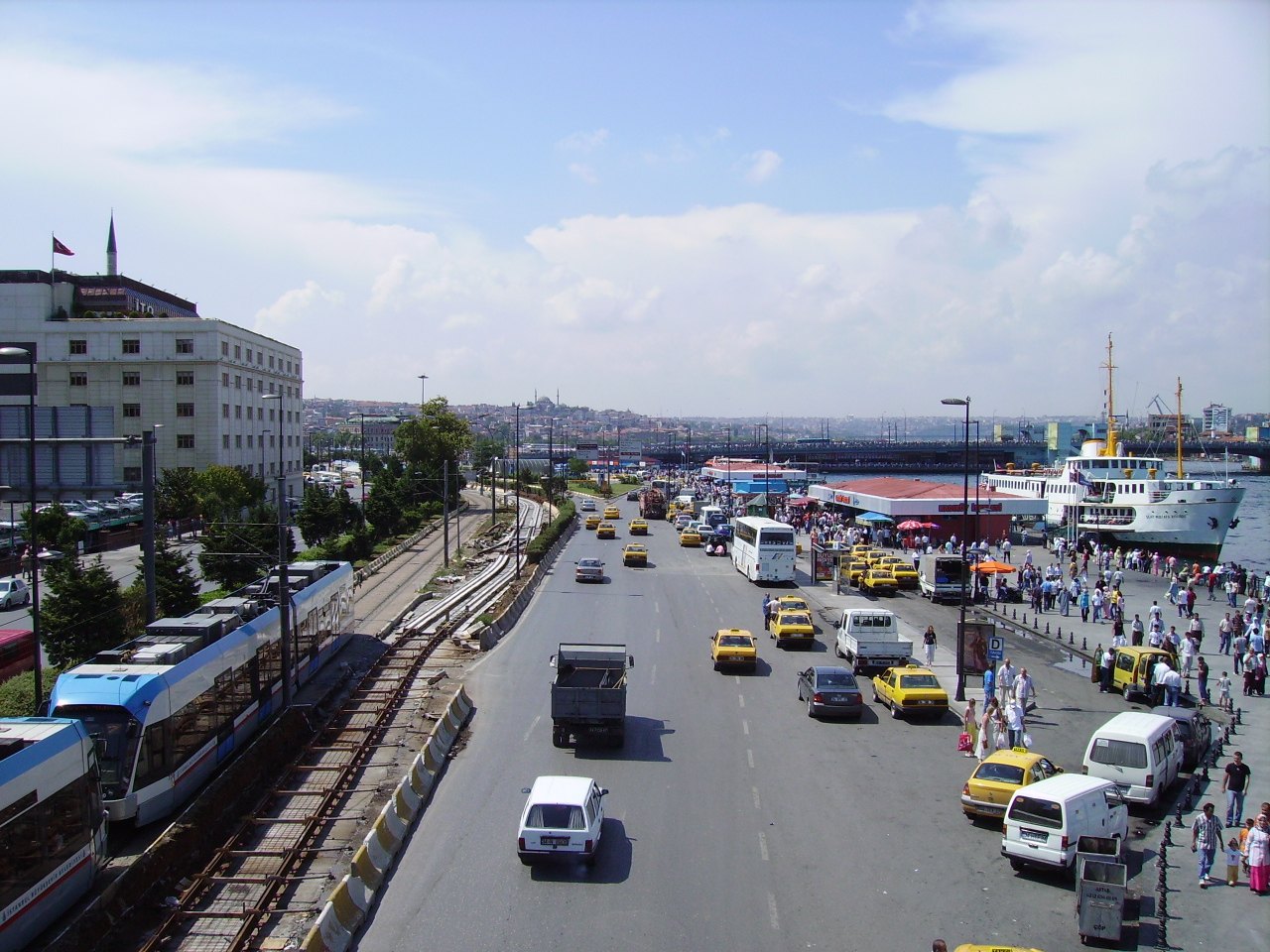
Featured image: Photo by mwanasimba from La Réunion, source, CC BY-SA 2.0
