Istanbul runs on cards for the metro, the trams and most restaurants and shops. Cash still rules two corners of the city: small vendors and market stalls, and a handful of museum ticket booths where card machines are not installed at all. State museums also charge two different prices for the same ticket — one for residents, one for foreign visitors — and only a specific kind of resident status actually qualifies for the lower one.
Cards cover most of daily spending
Contactless and chip-and-PIN cards work in the large supermarket chains, department stores, chain cafés and most sit-down restaurants across the city. Hotels take cards as a matter of course. The İstanbulkart, the city’s rechargeable transport card, covers trams, metro, buses, funiculars, Marmaray and the public ferries, and can usually be topped up by card as well as cash at station machines. Our guide to what the İstanbulkart does and doesn’t cover goes into the gaps in that system.
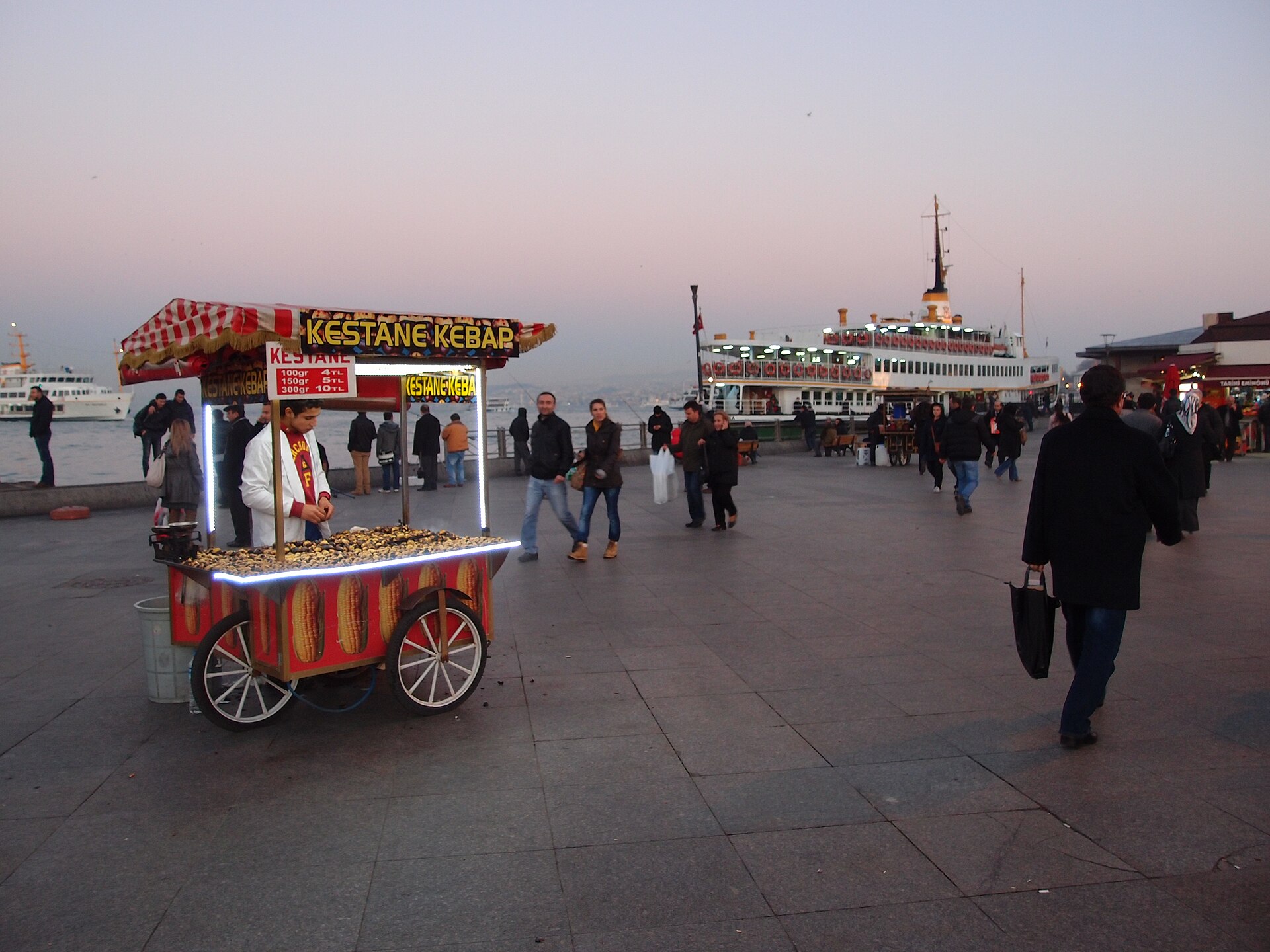
Where cards fail is smaller and older businesses: a stall in a bazaar, a neighbourhood grocer, a street vendor selling simit or roasted chestnuts. Many of these have never installed a terminal and have no plan to. This is not a scam or a hidden fee — it’s simply a business that has always run on cash and sees no reason to change.
The resident price is not about how long you’ve stayed
Turkey’s state museums and historic sites, run under the Ministry of Culture and Tourism, sell two different tickets for the same building. One rate applies to Turkish citizens and to foreign nationals who hold Turkish residency. A separate, higher rate applies to everyone else, priced in euros and adjusted periodically. The structure is set out on the ministry’s own museum ticketing portal, muze.gov.tr, which is the place to check current figures rather than any third-party site.
The word that matters at the ticket window is ikamet — the residence permit. A long stay in the city does not qualify a visitor for the resident rate. A Turkish surname, a Turkish spouse, or fluent Turkish does not qualify either. What the cashier checks is a document: a valid ikamet card, or a T.C. kimlik (Turkish citizen ID) for citizens. Nothing else is accepted as proof, because nothing else is proof.
| Situation | Qualifies for resident price? | What’s checked at the window |
|---|---|---|
| Turkish citizen | Yes | T.C. kimlik card |
| Foreign national holding a valid ikamet | Yes | Ikamet card, sometimes with passport |
| Married to a Turkish citizen, no ikamet held | No | — |
| Living in Istanbul long-term on tourist entries, no ikamet | No | — |
| Turkish heritage or surname, foreign passport, no ikamet | No | — |
The rule is document-based, not situation-based. A person who feels like a resident but has never registered for an ikamet pays the foreign rate. A person who has just arrived with the paperwork pays the resident rate on day one. Museum staff are checking a card, not a story.
.jpg)
Cash-only booths inside otherwise card-friendly sites
The bigger complication is that a site can generally accept cards and still have one booth that doesn’t. Topkapı Palace is the clearest example: the main palace entrance takes cards, but the separate ticket for the Harem — a distinct, additional ticket covering the sultan’s private quarters — has a long-standing pattern of cash-only sale at its own booth, independent of the palace’s general terminal. Several of the smaller sites clustered around Sultanahmet have the same habit: a single elderly card reader that is “down today”, or no reader at all. It’s worth checking Topkapı Palace’s own site for its current ticketing setup, but carrying cash as backup for the Harem line specifically is the safer plan.
| Site or ticket | General card acceptance | Known cash-only friction point |
|---|---|---|
| Topkapı Palace, main entrance | Yes | None reported |
| Topkapı Palace, Harem ticket | Palace-wide: yes | Separate Harem booth: cash has often been required |
| Smaller Sultanahmet-area museums | Varies | Single terminal, sometimes out of service |
| Market stalls, street food | Rare | Cash expected as default |
None of this is a reason to carry only cash. It’s a reason to carry some, in Turkish lira, specifically for the day a museum visit includes Topkapı or one of the smaller state sites near it. Twenty minutes of planning solves a problem that ruins a lot of arrivals at the window.
.jpg)
Where the money itself comes from
ATMs are everywhere in the tourist districts and dispense Turkish lira; foreign cards generally work but may carry a foreign-transaction fee set by the visitor’s own bank, not by the machine. Currency exchange offices (döviz) cluster around İstiklal Caddesi and the Grand Bazaar area and post their rates on a board outside — it’s worth comparing two or three before changing a large sum, since spreads vary between offices on the same street. Exchanging at the airport, while convenient, is rarely the best rate.
The Grand Bazaar itself is a case study in the cash economy: a market of small, independent stallholders where haggling is standard and card use is patchy stall to stall. It’s also closed every Sunday and on public holidays, a fact detailed in our piece on why the Grand Bazaar closes on Sundays and what to do instead. The Spice Bazaar, nearby, stays open and takes cards more consistently.
What to actually carry
- An İstanbulkart, topped up, for all transport — details in our Getting Around archive.
- A card for restaurants, hotels, chain shops and most museum main entrances.
- Some cash in lira for market stalls, street food, and the Topkapı Harem ticket specifically.
- Your ikamet card, if you hold one, kept separate from your passport for museum windows.
- Small notes rather than large ones — vendors in bazaars often struggle to change a big bill.
The same cash habit applies to mosques, though no money changes hands there: mosques charge no admission at all, and the only cost of entry is dress and timing, covered in our guide to visiting a working mosque in Istanbul. For a wider view of how goods and prices work across the city’s markets, see the Bazaars & Shopping archive.
None of this is guesswork on our part — it’s drawn from the ministry’s own published ticketing structure and the operators’ own sites, which is also how this site works generally; see how Access Istanbul is written and checked. Figures move. The rules that decide which rate you pay and where your card will fail don’t move nearly as often, and that’s the part worth remembering at the window.
.jpg)

Access Istanbul is an independent guide written from published, checkable sources. We have not visited the places described here and we do not publish personal recommendations or invented ‘local favorites’ — where something is singled out as notable, we say who says so. Opening times, fares, closures and prices change at short notice, so treat everything here as a starting point and confirm with the museum, operator or venue directly before building a day around it. We give no advice on visas, insurance, health or safety; use your own government’s official guidance for those.
Featured image: Photo by mwanasimba from La Réunion, source, CC BY-SA 2.0
.jpg)