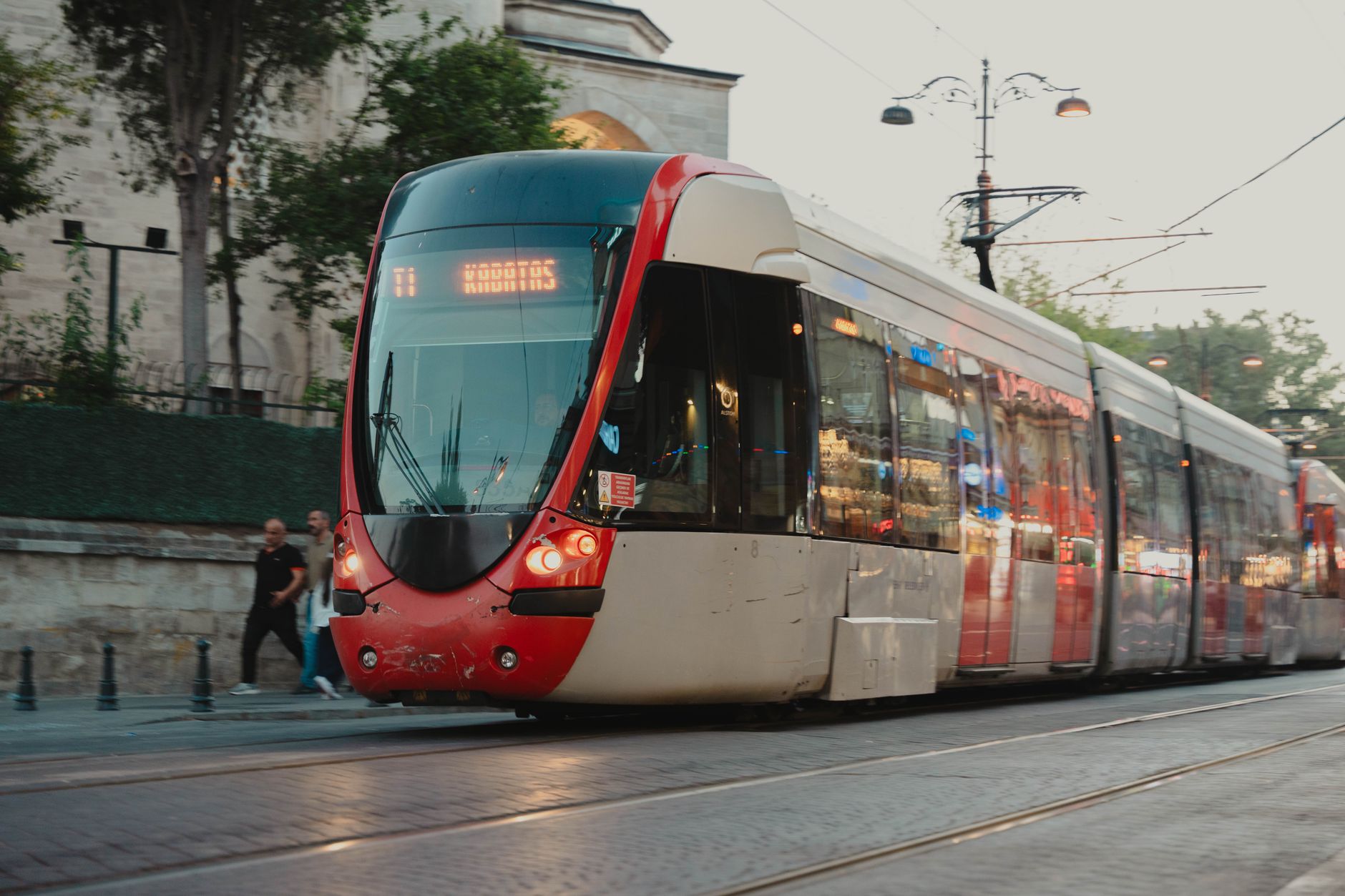
Where the T1 Actually Goes
The T1 starts at Kabataş, on the Bosphorus shore, and ends far west in Bağcılar, roughly 18 kilometers away. Most visitors only ride the first third of it. Thirteen stops between Kabataş and Topkapı carry nearly every sight on a typical itinerary: Hagia Sophia, the Blue Mosque, the Grand Bazaar, Galata Tower, the Spice Bazaar. The tram gets you near all of them. Near is the operative word. Several stops are named for a sight that sits a genuine uphill walk from the platform, not through a door at the exit. This article gives the walk, in minutes, and which side of the platform to leave from.
The Thirteen Stops, With Walk Times
The table below covers every tourist-relevant stop from Kabataş to Topkapı, in order. Times are approximate walking paces, not posted figures — treat them as a planning margin, not a guarantee.
| Stop | Sight | Walk from platform | Exit / direction |
|---|---|---|---|
| Kabataş | Dolmabahçe Palace | ~10 min | Exit toward the coast road, head north |
| Fındıklı | Istanbul Museum of Painting and Sculpture | ~2 min | Right at the stop, university side |
| Tophane | Nusretiye Mosque / Tophane-i Amire | 2-3 min | Right at the stop, either side |
| Karaköy | Galata Tower | 8-10 min, uphill | Exit away from the water, climb via Kemeraltı Caddesi |
| Eminönü | Spice Bazaar, Yeni Cami | ~2 min | Exit on the Golden Horn side |
| Sirkeci | Sirkeci railway station | ~2 min | Exit south, across the road |
| Gülhane | Gülhane Park; Topkapı Palace gate further in | Park at stop; gate 10-12 min | Enter the park, keep uphill through it |
| Sultanahmet | Hagia Sophia, Blue Mosque, Basilica Cistern, Hippodrome | 2-7 min | Exit on the square side, follow the signs |
| Çemberlitaş | Column of Constantine at stop; Grand Bazaar further | Column: 1 min; bazaar: 8-10 min uphill | Exit away from the sea, up Yeniçeriler Caddesi |
| Beyazıt-Kapalıçarşı | Grand Bazaar (Beyazıt Gate) | 3-4 min | Exit toward the square |
| Laleli-Üniversite | Laleli Mosque | ~3 min | Right at the stop |
| Aksaray | Valens Aqueduct; Marmaray/M1 transfer | Aqueduct: 5-7 min | Follow signs for the Marmaray/M1 transfer |
| Topkapı | Topkapı Gate, Theodosian land walls | At stop | Exit on either side |
Kabataş, Fındıklı, Tophane: the First Three Stops
Kabataş is the line’s eastern end and a transfer point in its own right. A funicular climbs from the same station up to Taksim. Ferries leave from the adjacent dock for Üsküdar, Kadıköy and the Princes’ Islands. Dolmabahçe Palace is the nearest major sight — a walk north along the coast road, about 10 minutes. Fındıklı, one stop on, sits beside Mimar Sinan Fine Arts University. The Istanbul Museum of Painting and Sculpture is part of the same campus, a couple of minutes from the platform; see the university’s own site for its hours and collection. Tophane follows: Nusretiye Mosque stands directly across from the stop, and the former Ottoman cannon foundry, Tophane-i Amire, now used as an exhibition space by the same university, is a few steps further. From Tophane, Boğazkesen Caddesi climbs toward İstiklal Caddesi and Beyoğlu — a steady uphill walk of 10 to 12 minutes, and not a stop most people make on foot.
Karaköy: Galata Tower Is Not at the Tram Stop
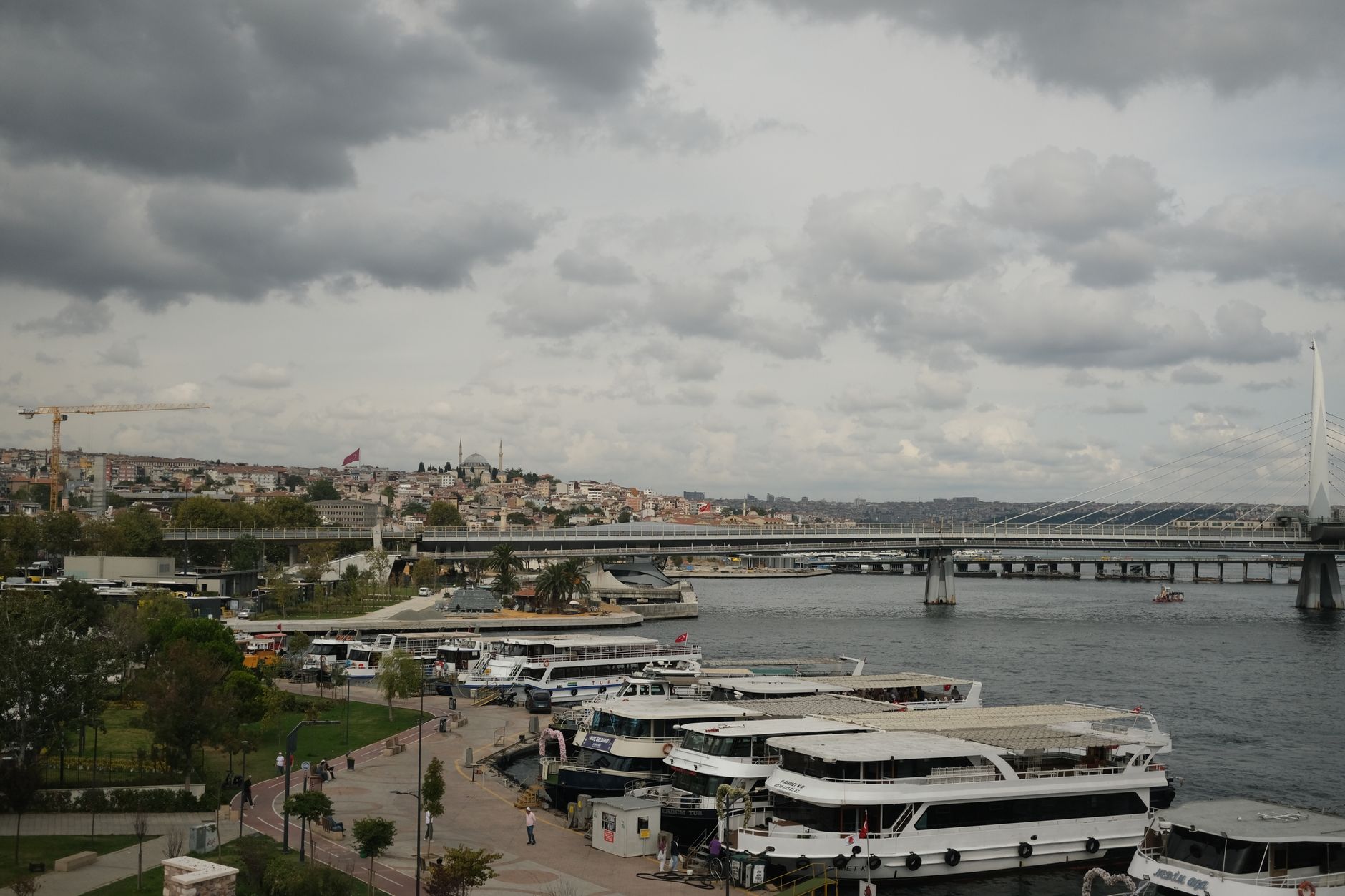
Karaköy sits at the water’s edge, by the Golden Horn. Galata Tower stands on a hill above it, in the old Genoese quarter. The walk is roughly 700 meters and climbs the whole way — figure 8 to 10 minutes, not the 2 or 3 the map suggests. Leave the stop on the side away from the water and head up Kemeraltı Caddesi or any of the small streets climbing beside it; uphill is the right direction, regardless of which one. Karaköy is also where the Galata Bridge meets the European shore. Ferries to Üsküdar and Kadıköy leave from the same waterfront, on the same İstanbulkart — see why the ferry is public transport, not a tour.
Eminönü: the Spice Bazaar and the Ferry Docks
Eminönü is as direct as the line gets. The Spice Bazaar (Mısır Çarşısı) and Yeni Cami sit right at the stop, across the tracks from the water. Galata Bridge crosses the Golden Horn from here. Ferry docks line the waterfront, running boats to Üsküdar, Kadıköy and up the Bosphorus. They take the same İstanbulkart as the tram, for a bus-level fare. The boats moored alongside selling “Bosphorus cruises” charge several times as much for the same stretch of water. Under the bridge, boats sell fish sandwiches from the water — see how the Eminönü fish-sandwich boats actually work.

Gülhane and Sultanahmet: Topkapı Palace’s Two Approaches
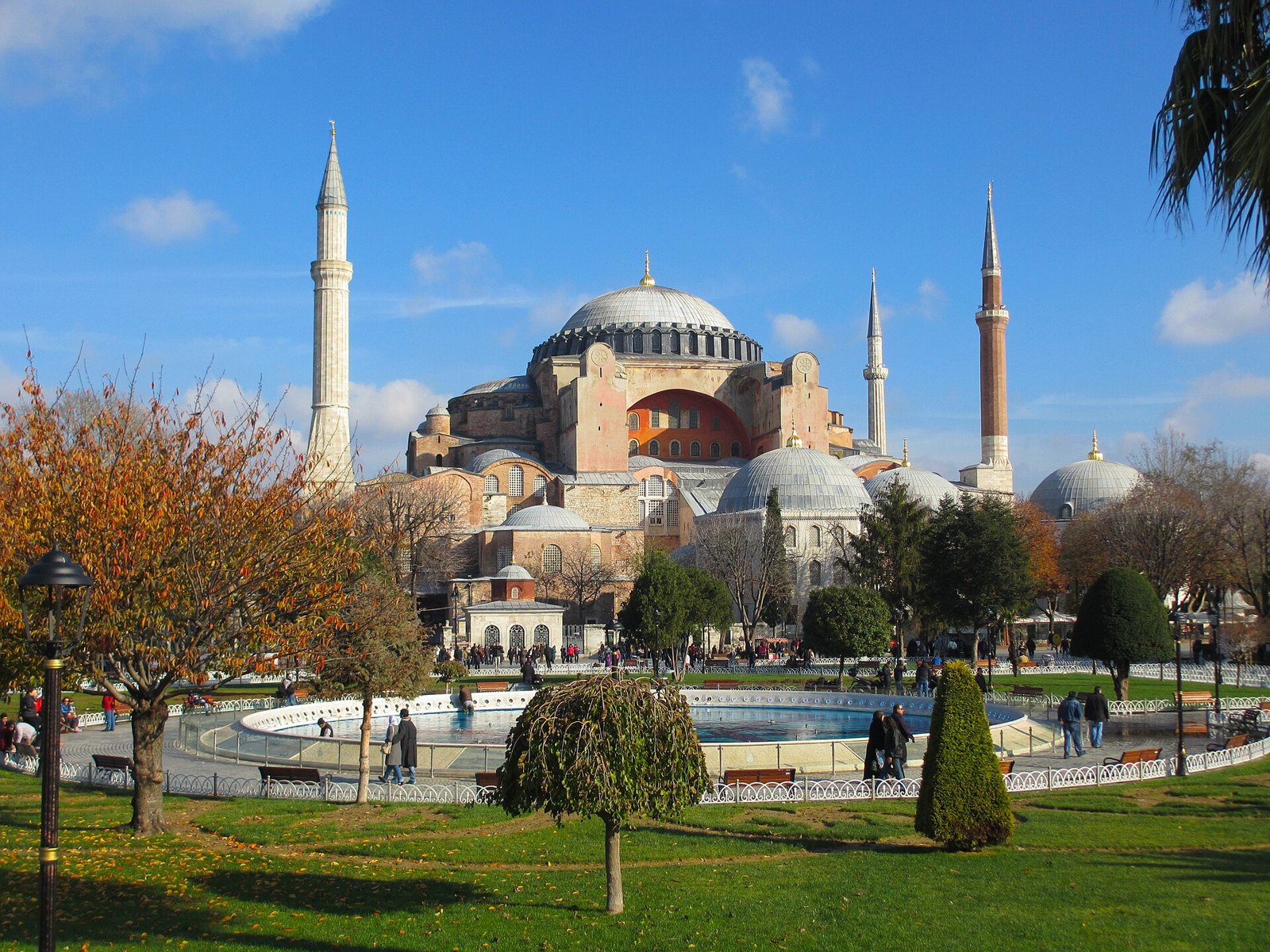
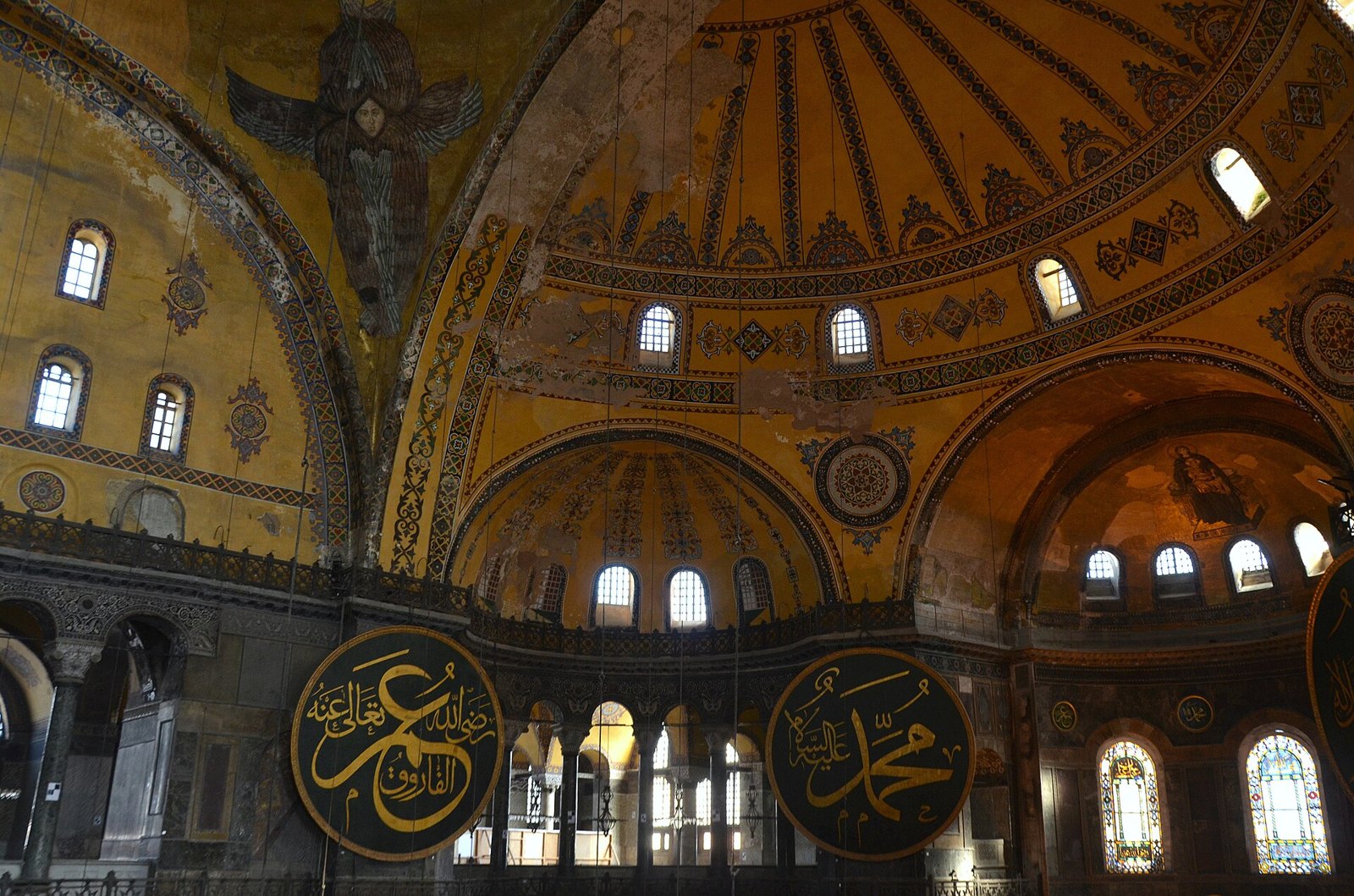
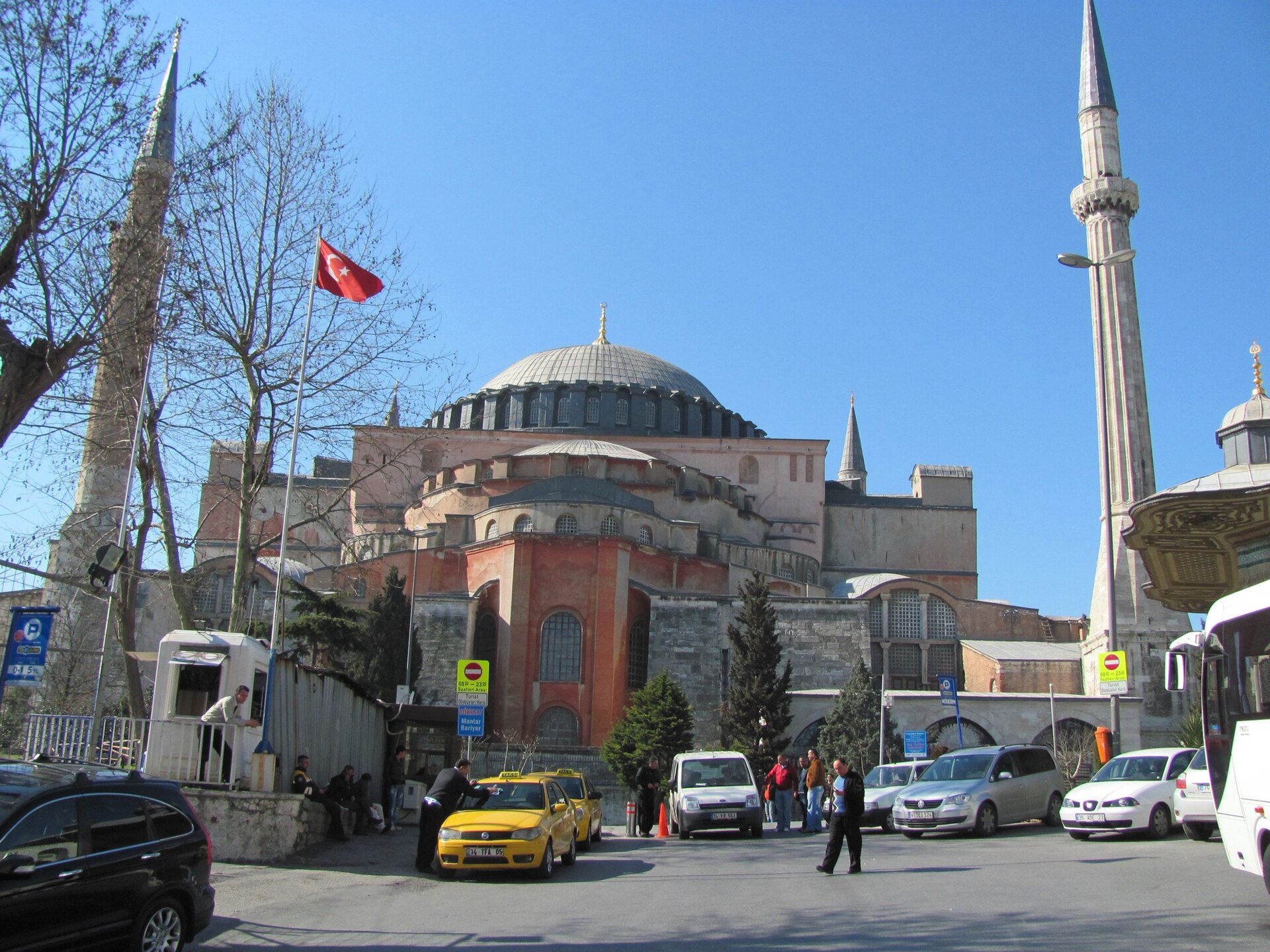
Gülhane station sits at the edge of Gülhane Park, formerly the outer gardens of Topkapı Palace. The park gate is right at the stop. The palace’s own ticket gate is a further 10 to 12 minute walk uphill through the park or around its edge. Sultanahmet, one stop on, is the more direct approach. Topkapı Palace’s main gate, Hagia Sophia, the Blue Mosque, the Basilica Cistern and the Hippodrome — At Meydanı — all sit within 2 to 7 minutes of this single stop. It is the busiest stop on the line for a reason. UNESCO inscribes this stretch of the old city as the Historic Areas of Istanbul; see UNESCO’s own record for the inscription. Hagia Sophia’s prayer floor is free to enter. A separate ticket, with timed entry, covers the upper gallery. That figure changes often enough that this site will not print it — see how cards, cash and the two-tier museum price work. The Blue Mosque closes to visitors around each daily prayer, and those times shift with the sun through the year — see dress and timing rules for visiting a working mosque.
Çemberlitaş: the Column Is at the Door, the Bazaar Is Not
Çemberlitaş takes its name from the burnt column of Constantine standing right beside the tram line — that part is accurate. The Grand Bazaar is a different matter. Its nearest gate is about 600 meters north, uphill, an 8 to 10 minute walk. Exit on the side away from the sea and climb Yeniçeriler Caddesi; the bazaar’s domes become visible before the gate does. Çemberlitaş Hamamı, a working Ottoman bathhouse attributed to the architect Mimar Sinan, sits at the stop itself. Grand Bazaar hours matter here, too. It is closed on Sundays and on public holidays. That single fact strands more itineraries than anything else about this city — see why the Grand Bazaar closes on Sundays, and where to go instead.

Beyazıt-Kapalıçarşı and Laleli-Üniversite
Beyazıt-Kapalıçarşı is the better bet for the bazaar itself: the Beyazıt Gate is about 200 meters from the stop, 3 to 4 minutes on foot. Beyazıt Mosque and the main gate of Istanbul University sit on the same square. Sahaflar Çarşısı, a small market of secondhand and antiquarian booksellers, is tucked between the mosque and the bazaar’s gate. One stop further, Laleli-Üniversite puts Laleli Mosque within 3 minutes of the platform.
Aksaray: Where the Tram Meets Marmaray
Aksaray is a transfer point, not a sightseeing stop in its own right. It connects the T1 to the M1 metro and to Marmaray, the rail tunnel under the strait — see how Marmaray crosses continents under the strait. The Valens Aqueduct, a Roman-era structure still spanning a city avenue, stands about 5 to 7 minutes’ walk north. Topkapı, several stops further west, marks a gate in the old Theodosian land walls — a different Topkapı from the palace near Sultanahmet, and worth noting precisely because the names collide.
The Fare: One Card, One Discount for Transfers
The T1 takes the İstanbulkart, the same rechargeable card used on the metro, the buses, the funiculars, Marmaray and the public ferries. A single tap pays the tram fare. A second tap on a connecting line, within a set window, costs less than a fresh fare, though not nothing. Exact figures change periodically, and this site will not print a number likely to be stale by the time it’s read. Fares are set by Istanbul’s transport operator and published on the card’s own site — see İstanbulkart’s official site for the current structure, and what the İstanbulkart does and doesn’t cover for how the transfer discount works.
Riding It End to End
The full line takes roughly 45 minutes to an hour from end to end. It runs at street level and shares some junctions with road traffic, so timing is approximate. Few visitors need to go that far; the sights thin out fast past Aksaray. How this site is researched, and what it does and doesn’t claim firsthand, is set out on the About page, and what reading this site collects about you is covered on the privacy policy.
Access Istanbul is an independent guide written from published, checkable sources. We have not visited the places described here and we do not publish personal recommendations or invented ‘local favorites’ — where something is singled out as notable, we say who says so. Opening times, fares, closures and prices change at short notice, so treat everything here as a starting point and confirm with the museum, operator or venue directly before building a day around it. We give no advice on visas, insurance, health or safety; use your own government’s official guidance for those.
Featured image: Photo by Berlinaut, source, CC BY-SA 4.0
