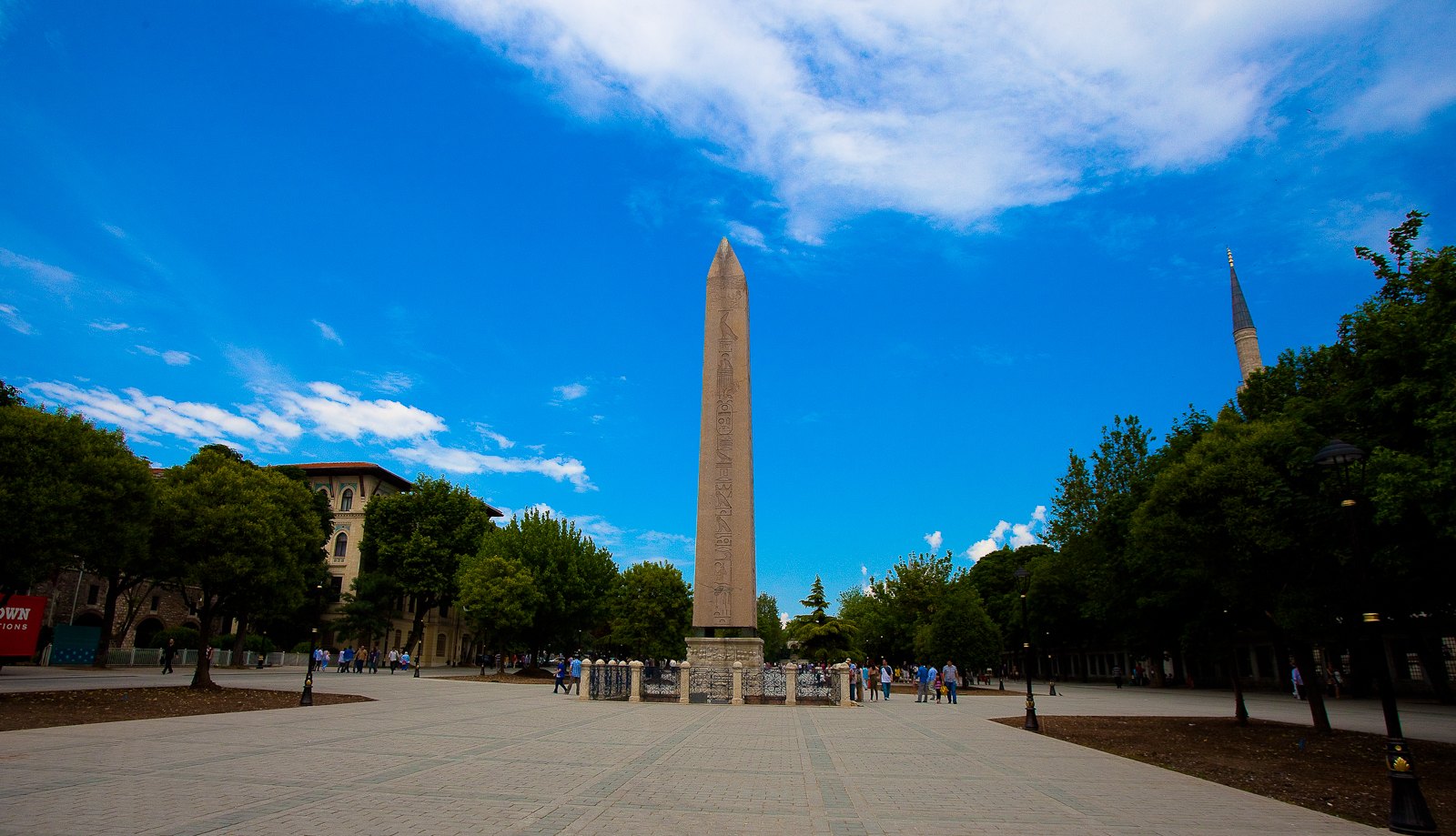

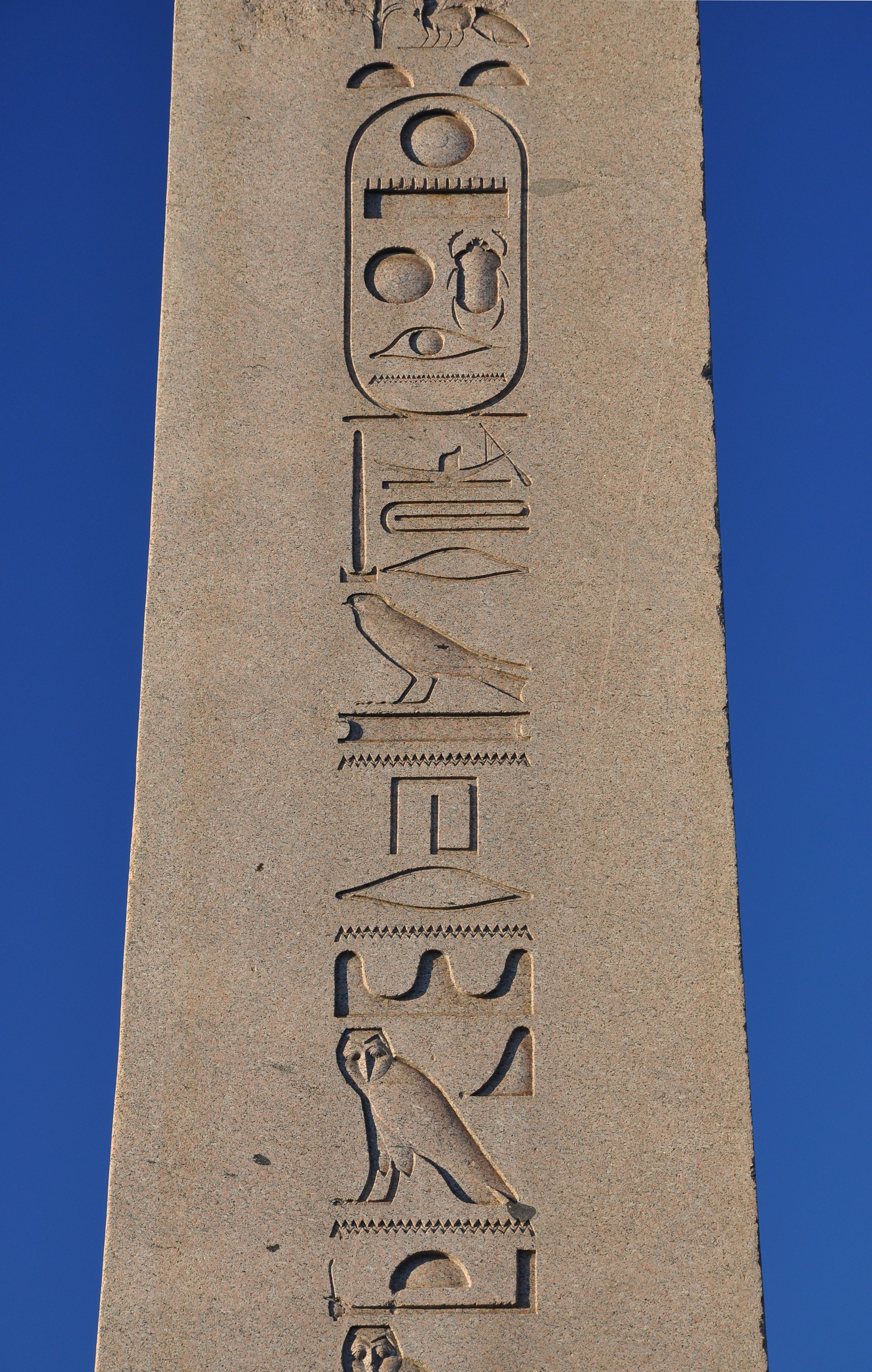
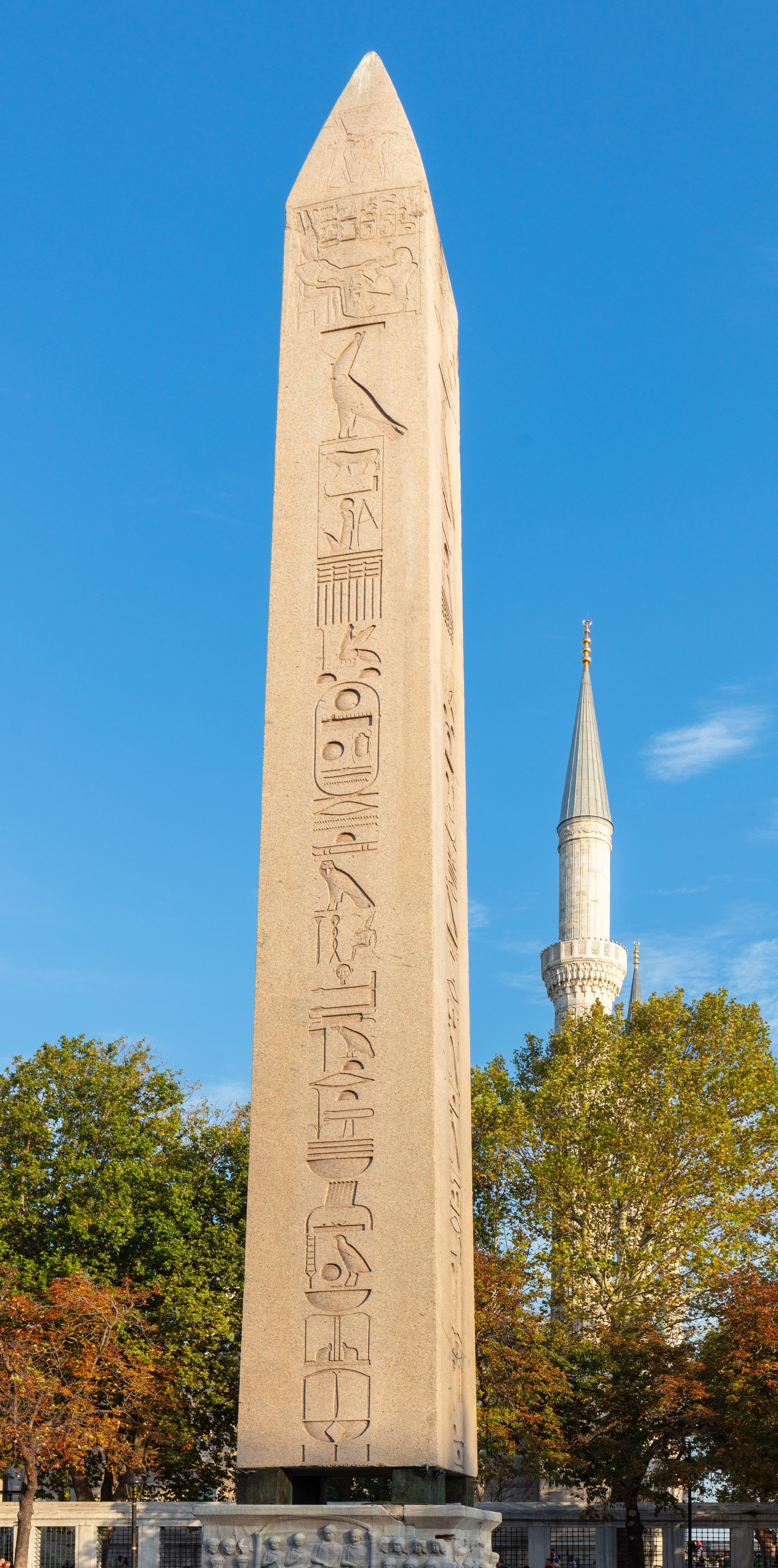
The long open square beside the Blue Mosque is the floor of the Roman chariot track that was the centre of Byzantine public life. Three monuments are still standing on the old central spine: an Egyptian obelisk cut for Thutmose III and older than the city by two thousand years, a bronze serpent column looted from Delphi, and a rough masonry pillar stripped of its plating.
The track held perhaps a hundred thousand people, and the rivalry between the Blue and Green factions who raced here was political as much as sporting: the Nika riots of 532 started in these stands and ended with much of the city burned and tens of thousands dead in this square.
What it costs
Free, unfenced, and open at every hour. It is a public square.
When to go
Early morning, when it is empty and the light is low across the carvings on the obelisk base. By ten it is a thoroughfare.

Getting there
Sultanahmet tram stop. It is the space between the Blue Mosque and the Turkish and Islamic Arts Museum, and most people cross it without realising what it is.

If you only have an hour
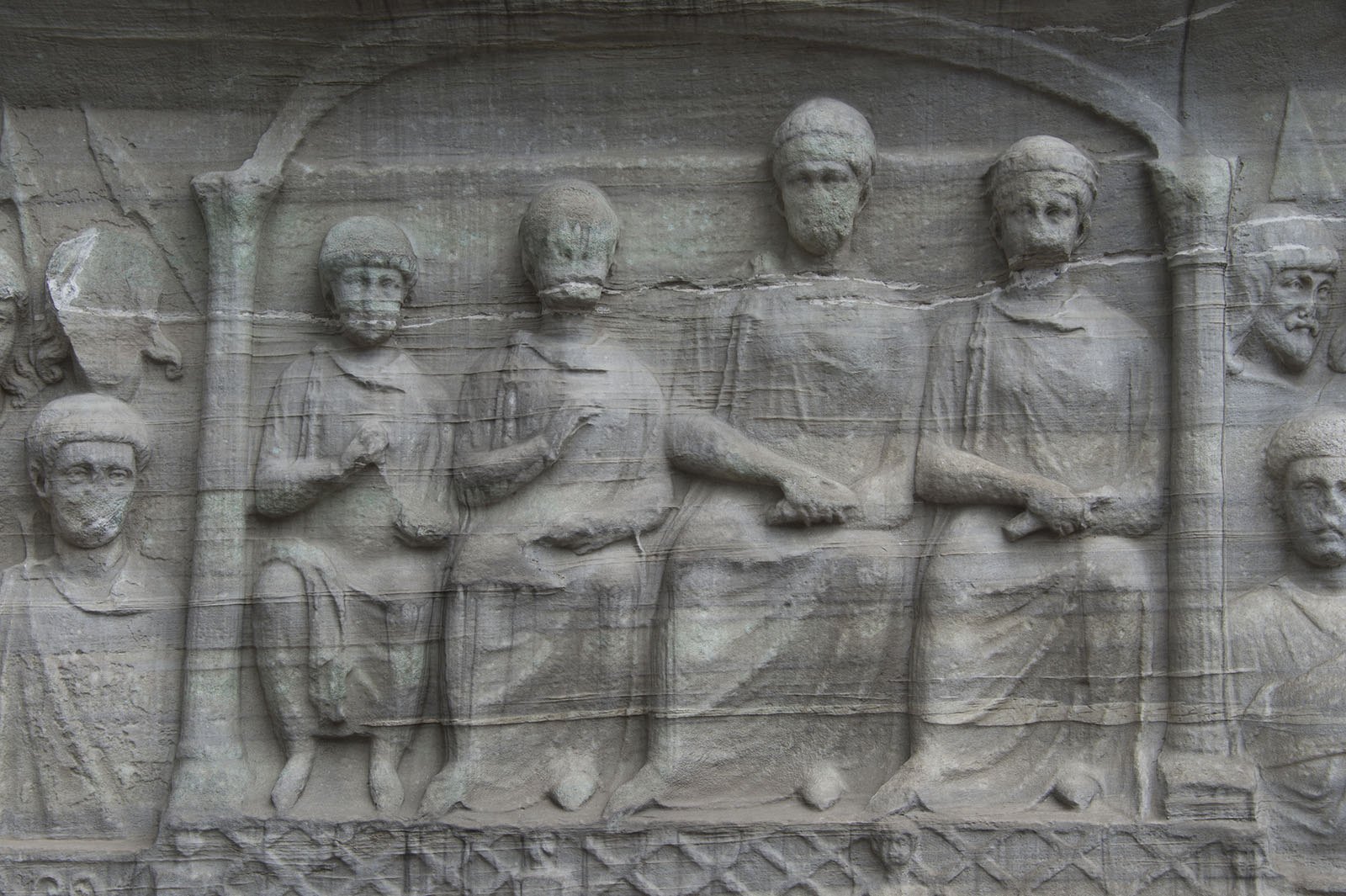
Go and look at the base of the obelisk. Four carved faces show the emperor and his court watching the races from the imperial box, and one shows the obelisk itself being put up. It is the clearest surviving picture of what happened here, and it is at eye level, and nobody stops at it.
What people get wrong
Walking past it. There is no gate, no sign at the entrance and no ticket, so it reads as a park rather than as one of the most important spaces in Roman history.
And looking for the fourth monument. The bronze horses that stood over the starting gates were taken by the Fourth Crusade in 1204 and are in Venice, on the front of St Mark’s.

Nearby
Ticketing arrangements, prayer-time closures and opening patterns as published and checked on 5 September 2026. These change without much warning — confirm with the place itself before you travel. More sights, and how they fit together, in Landmarks & Sights.